Mold Questions Answered for Littleton, CO Property Owners
Most people do not look up mold because they want to learn about it. They look it up because they just found a spot, smelled something odd, or got a surprise from an inspector. The answers below are written for Littleton and the Front Range, in plain words. If your situation is not covered, call us and we will talk it through.
- Free Estimates
- Licensed and insured
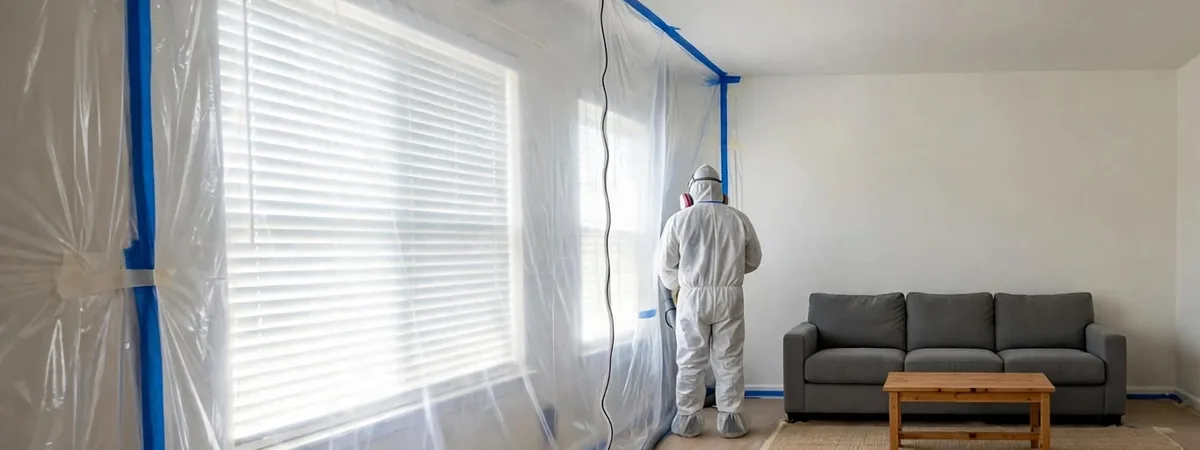
I Just Found Mold. What Do I Do First?
What should I do in the first hour after finding mold?
Stay calm and keep the area closed off. Then do these things in order.
- Stop any water you can safely stop, such as a shutoff valve under a sink.
- Close the door and keep fans and the furnace blower from blowing toward the area.
- Take photos, with a coin or tape measure next to the mold for scale.
- Do not scrub, sand, or spray it.
- Write down when you first noticed it and anything that got wet recently.
- Call a professional if the area is large or you do not know the cause.
Is it safe to tear out moldy drywall myself?
Usually not. Cutting a wall open sends dust and spores into the room and possibly into the ducts. The EPA says areas larger than about 10 square feet are generally a job for trained people. In an older home there is another reason to wait: walls and textures from before the 1980s can contain materials that need special handling.
Can I stay in the house while I wait?
Often, yes, if the area is small and closed off. Avoid sleeping in the affected room. Anyone with asthma, allergies, a lung condition, or a weak immune system should ask their doctor and move to a clean room or another place if symptoms flare.
How can I tell how far the mold goes?
You cannot tell from the surface. Mold on paint often means damp drywall, insulation, or framing behind it. A technician checks moisture around the stain to find the edges of the wet area, and sometimes opens a small inspection hole.
Mold Keeps Coming Back
Why does mold keep coming back after I clean it?
Because the moisture is still there. Wiping removes the surface growth, but a slow leak, cold condensation, or damp soil near the foundation lets it grow again. Find the water, fix it, and dry the material before you clean or paint.
Why does it return in the same corner or closet?
Corners and closets on exterior walls are colder, and air does not move there. In winter, warm room air condenses on the cold wall. Pull furniture a few inches from the wall, keep closet doors cracked open, and do not pack closets tight.
Does mold-blocking primer fix it?
A mold-resistant primer protects a clean, dry surface. It cannot stop mold that is already growing, and it cannot fix a wet wall. Use it as a finishing step after the cause is repaired.
Can mold return after professional remediation?
It can if the water source returns. Good remediation removes the mold and the damaged material, and a good plan fixes the moisture. After that, watch for new stains, musty smells, and damp walls, especially after storms and thaws.
Smells, Stains, and Hidden Mold
Why does my house smell musty when I cannot see mold?
Mold can grow where you cannot see it: behind drywall, under carpet, in a crawl space, or in ductwork. Damp insulation, a wet carpet pad, or a leaking pipe in a wall can all smell like mold. A moisture check can often find the source without opening a wall.
Why does my basement smell worse in spring?
Snowmelt and spring rain push water toward the foundation. Clay soil holds that water, and a cool, damp basement gives off the smell. Check window wells, gutters, and the sump pump, then call us if the odor remains. Read more in our guide to why Littleton basements grow mold.
What does a brown ring on my ceiling mean?
It usually means water passed through the ceiling at some point. The ring marks the edge of where it dried. It may be an old leak or an active one. Press near it. If it is soft, or the ring grows, water is still present.
Is white fuzz on my basement wall mold?
It can be mold or it can be efflorescence, a white mineral deposit left by water moving through masonry. Efflorescence is crumbly and dry and does not smell. Either way, it signals moisture that should be investigated.
Do I need to worry about mold in my air ducts?
Only if you see growth or have a known water event near the system. Dust and smell alone do not prove mold. If you have visible growth inside a duct or at a register, call a professional before you run the system.
Home Remedies: What Works and What Backfires
Does bleach kill mold?
Bleach can lighten surface stains on non-porous materials, but it does not penetrate drywall or wood and does not fix the moisture. It adds water to porous surfaces, and mixing it with other cleaners can create dangerous fumes. The EPA does not recommend routine bleach use for mold.
Does vinegar work?
Vinegar can clean some light surface growth on hard surfaces. It does nothing for mold inside drywall, wood, or carpet, and it does not address the cause.
Can I paint over mold?
No. Paint hides the stain but traps moisture, and the mold returns, often worse. Remove the mold, dry the material, and fix the source first.
Will a dehumidifier get rid of mold?
A dehumidifier helps prevent mold by lowering humidity, but it does not remove growth that already exists. The EPA suggests keeping indoor humidity below 60 percent, ideally between 30 and 50 percent.
Can I use a fan to dry a moldy wall?
Not on visible mold. A fan can blow spores around. Let a professional contain the area first.
Storms, Hail, Ice Dams, and Insurance
Does hail damage lead to mold?
It can. Cracked shingles and loosened flashing may not leak until a thaw or heavy rain. Wet insulation and ceilings then grow mold. Check ceilings and the attic after a big storm, and have a roofer look at any damage.
Can an ice dam cause mold?
Yes. Meltwater that backs up under shingles can soak insulation, decking, and ceilings. Left wet, those materials can grow mold. Fix the cause with better air sealing, insulation, and ventilation, as described in our guide to ice dams and attic mold.
How fast does mold grow after a flood or burst pipe?
The EPA notes that mold can begin to grow within 24 to 48 hours on materials that stay wet. Dry things quickly and call a professional if materials stay wet for more than a day or two.
Is mold covered by homeowners insurance in Colorado?
It depends on your policy and the cause. Many policies cover mold that follows a sudden covered water event and limit or exclude mold from long-term leaks or neglect. Read your policy, ask your agent, and take photos before anything is removed. We are not insurance advisors, and we cannot promise coverage.
Do you help with insurance paperwork?
We can share our notes, moisture readings, and photos with you for your claim. We cannot guarantee how an insurer will respond.
Living in a Home With Mold
Can mold make me sick?
Mold can cause symptoms in some people, such as sneezing, coughing, itchy eyes, and skin irritation, and people with asthma or weak immune systems can be affected more. Reactions vary a lot. We cannot give medical advice, so please talk with a doctor about symptoms.
Should I move out during cleanup?
For a small, sealed area, many people stay. If the mold is in a bedroom, if the area is large, or if someone is sensitive, consider staying elsewhere during the work. Ask us and your doctor.
What about pets?
Keep pets out of the work area and away from damaged materials. Ask your vet if a pet has unusual symptoms.
What should I do with moldy belongings?
Hard items can often be cleaned. Soft items such as upholstered furniture, mattresses, and stuffed toys that were wet and moldy are often not worth saving. Ask us before moving items out of the area, so you do not spread spores.
Hiring a Mold Remediation Company in Colorado
Does Colorado license mold remediation companies?
Colorado does not currently issue a state license for mold remediation or mold assessment. That means you need to ask questions. Ask about business registration, insurance, training, equipment, and a written scope of work. For asbestos, a different set of Colorado rules applies, so ask about older materials too.
What should a good estimate include?
A written scope that lists the area, the work, what will be removed and what will be cleaned, how containment will be done, and what the price covers. It should also say what happens if hidden damage is found.
Should the company that does the work also test?
Some people prefer independent testing, so the person who sells the work is not the one measuring it. Others are comfortable with one company. Either way, ask who does the sampling, how, and which lab analyzes it.
How much does mold remediation cost in Littleton?
It depends on size, location, materials, and equipment. A small bathroom job costs far less than a finished basement. We give a free estimate with clear pricing after we look at the area. Be careful about any company that quotes a firm number by phone without seeing the problem.
What are signs of a company to avoid?
Pressure to sign right away, a price that has no written scope, claims that mold will never come back, a refusal to explain containment, and any promise to "kill" mold with a spray alone.
Do I need a mold test?
Not always. The CDC notes that in most cases, if you can see or smell mold, you do not need to sample it. Testing can help when you smell mold but cannot find it, when there is a dispute, or when you want documentation. Colorado does not license samplers, so ask about their method and the lab.
Rentals, Condos, and Selling
I rent and found mold. What can I do?
Tell your landlord in writing, with photos and dates, and keep a copy. Colorado's warranty of habitability law, strengthened by HB19-1170 in 2019, covers conditions that can make a rental unfit to live in, and sets timelines for landlords to respond. Details vary, so contact a tenant rights group or an attorney. Our guide to mold in a Colorado rental gives the general picture.
Mold came from my upstairs neighbor in a condo. Who handles it?
It depends on your HOA documents, the cause, and the policies involved. Report the leak to the HOA or property manager, document everything, and ask who is responsible for each part. We can look at the damage and write a scope.
I found mold during a home sale. What now?
Do not panic. Ask for the inspection report, find the moisture source, and get a written estimate. A repair plan and a clear scope often keep a sale moving. Talk to your agent about timing and disclosures.
Do landlords have to disclose mold?
Disclosure rules vary by situation. Ask an attorney or a Colorado real estate professional. We can document what we find.
Keeping Littleton Homes Dry
What humidity level should I aim for?
Below 60 percent, ideally between 30 and 50 percent. A cheap hygrometer shows you the number. Colorado winters are dry outdoors, but a tight, well-sealed house can still have damp corners.
What should I check each season?
In spring, check window wells, gutters, and the sump pump. In summer, check the roof and exterior after hail. In fall, clean gutters and downspouts. In winter, look at the attic for frost and at windows and cold corners for condensation.
Do I need a dehumidifier in my basement?
Many finished basements benefit from one, especially in spring and summer. Pick a unit sized for the space, drain it properly, and keep it away from walls and furniture.
Are humidifiers a problem?
They can be. A humidifier set too high adds moisture to cold surfaces and exterior walls. Keep the setting moderate, clean it as directed, and watch your windows for condensation.
Where to Go Next
To see the full process, read our mold remediation page. For where we work, visit areas we serve. For guides by topic, browse the blog.
Still stuck? Contact us and describe what you see. We will answer in plain words.